0

Cart

No products in the cart.

Product portfolio

Please install Yoast, RankMath, or SEOPress to use breadcrumbs.

What is a Data Acquisition (DAQ) System and How Measurements Are Integrated into the System

What is Data Acquisition (DAQ)?

Data collection  (usually abbreviated as  DAQ or DAS ) is the process of sampling signals that measure physical phenomena in the real world and converting them into a digital form that can be processed by computers and software.

Data collection  generally considered different from earlier forms of recording data on tape recorders or paper charts. Unlike those methods, the signal is converted from the analog domain to the digital domain and then recorded onto a digital medium such as ROM, flash memory, or a hard drive.
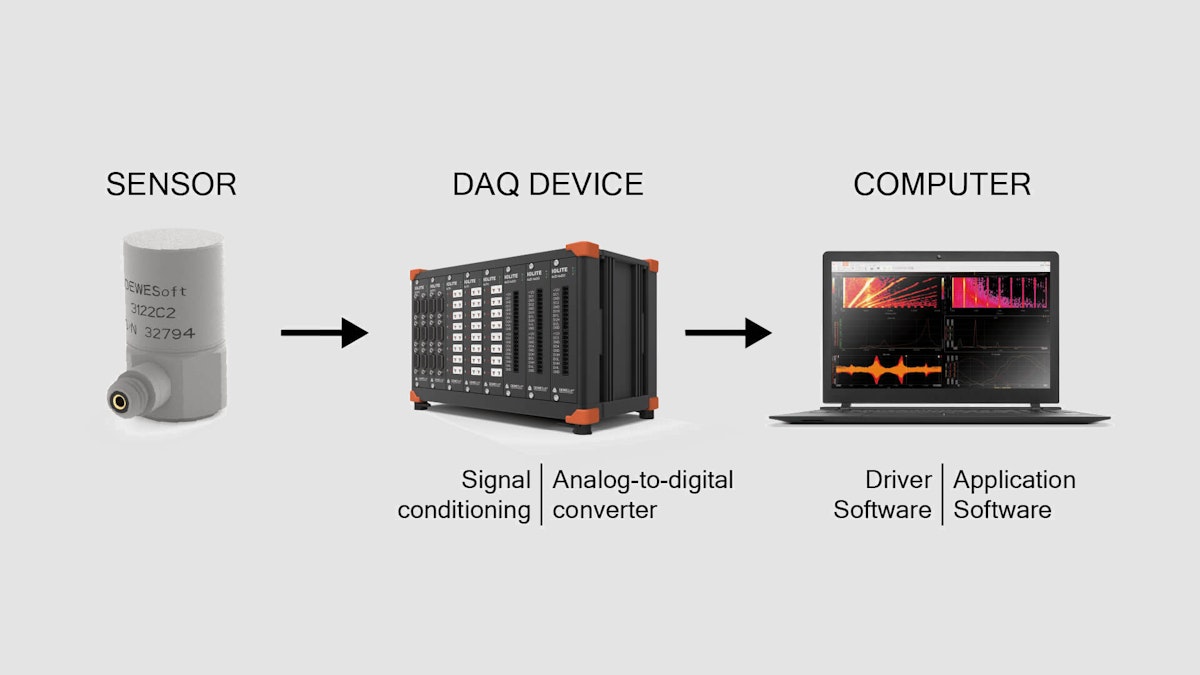
Daq system diagram

Components of a data acquisition system

Digital data collection system Modern physics includes four essential components that make up the entire chain of measurements of physical phenomena: 

  • Sensor
  • Signal conditioning
  • Analog to Digital Converter
  • Computer with DAQ software for data recording and analysis

NI GPIB-USB-HS+ (783368-01) IEEE 488 GPIB Device Controller

What does the data collection system measure?

Data acquisition systems are mainly used to measure physical phenomena such as:

  • Temperature
  • Voltage
  • Current
  • Deformation and pressure
  • Shock and vibration
  • Distance and Displacement
  • RPM, Angle and Discrete Events
  • Weight

Note that there are a number of other measures, including light and image, sound, volume, position, speed, etc. that can be measured by a data acquisition system.

NI USB-6509 96-Channel, 5 V, TTL/CMOS, 24 mA, USB Digital I/O Device—The USB-6509 is an industrial, bus-powered USB device that can directly drive external digital devices such as solid-state relays (SSRs). Each port can be configured for input or output, and no external power supply is required for output.

Purpose of data collection

The primary purpose of data acquisition systems is to collect and store data. However, they are also designed to provide real-time and post-recording data visualization and analysis capabilities. Furthermore, most data acquisition systems have some built-in analysis and reporting capabilities. 

A recent innovation is the integration of data acquisition and control, where a high-quality DAQ system is tightly coupled and synchronized with a real-time control system. You can learn more about this topic in the related article: “Integrating Data Acquisition with Real-Time Control Systems”.

Of course, engineers in different applications have different requirements, but these key capabilities are present to varying degrees:

  • Record data
  • Data saving
  • Real-time data visualization
  • Review data after recording
  • Analyze data using various mathematical and statistical operations
  • Create a report

Data acquisition devices are also widely used in surveillance applications. For example:

  • Monitor the condition of complex machines like generators, motors, fans, etc.
  • Monitor structural properties of buildings such as bridges, stadiums, etc.
  • Monitor energy consumption and energy efficiency in manufacturing processes.
  • And many other monitoring scenarios.
YouTube player

Comprehensive monitoring and testing solutions

SEMIKI Consulting's DAQ systems are specifically designed to meet a wide range of monitoring and control applications, including:

  • Environmental monitoring: To accurately monitor environmental conditions.
  • Burn-in test and life acceleration: Identify potential product weaknesses, improve durability and performance.
  • Error analysis: Investigate root causes of product failures to improve design and performance.

Specialized car inspection capabilities

SEMIKI's DAQ systems deliver excellence in automotive testing, equipped to handle various parts:
  • Check airbags and seat belts: The system is designed to test the airbag inflator and seat belt pretensioner to ensure safety.
  • Wire set analysis: Efficient testing solution for automotive wiring harnesses.
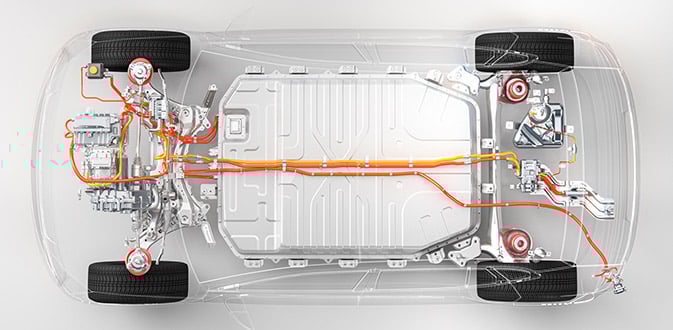
See-through image of an electric car showing battery and drivetrain

How to choose a data collection system

Selecting the right Data Acquisition (DAQ) system is critical to obtaining accurate and reliable measurements in a variety of applications. The effectiveness of a DAQ system depends on its ability to accurately meet specific measurement requirements, which involves considering several key factors:

  1. Accuracy and resolution: At the heart of the performance of a DAQ system is its accuracy, which is largely determined by the resolution of the analog-to-digital converter (ADC) and reference voltage stability. Choose a system with a higher resolution ADC and a stable reference voltage for more accurate measurements.
  2. Sampling rate: Essential for applications involving rapidly changing signals, higher sampling rates are important for high-speed data acquisition systems and dynamic control.
  3. Signal conditioning: Look for robust signal conditioning capabilities, including amplifying, filtering, or digitizing signals from various sensors to improve their quality and accuracy. This is especially important when adapting to different types of sensors such as thermocouples, stress gauges, and accelerometers.
  4. Software compatibility and functionality: Make sure the DAQ system comes with user-friendly software that provides powerful data visualization tools and supports multiple programming languages. Compatibility with different operating systems such as Windows, Linux or Mac OS adds to the system's flexibility.
  5. Number of channels: Consider the number of channels the system can support. A higher number of channels will increase the flexibility and scalability of the system in handling a wider variety of signals.
  6. Environmental adaptability: Evaluate the system's ability to perform under the environmental conditions specific to your application.
  7. Budget constraints: Evaluate the overall cost, including the price of the system or equipment and any additional accessories or software required.

USB-BIO 24-channel. Digital. Output & Monitor. Record and output digital TTL signals. USB-PIO has three 8-bit bidirectional ports. The port wires are led out to a 25-pin female D-Sub connector.

By carefully considering these aspects, you can choose a DAQ system that not only fits your specific needs, but also strikes a balance between performance, flexibility, and budget. This approach ensures that the selected system can effectively handle the required data acquisition tasks.

Digging deeper into the data collection system

Important insights gained from the DAQ System

DAQ systems are tools that collect and record data from a variety of sensors, which are essential for monitoring physical or electrical phenomena. These systems empower engineers with data-driven insights, allowing them to make more informed decisions in areas such as:

  • Trend and pattern analysis: Engineers use DAQ systems to identify trends in parameters such as temperature or pressure, allowing early detection of potential problems.
  • Fault detection and diagnosis: By analyzing data from a DAQ system, engineers can pinpoint faults in the system, identifying malfunctioning components or sensors.
  • Performance optimization: DAQ data helps identify inefficiencies, guiding engineers to optimize system performance and increase productivity.
  • Predictive maintenance: Data trend analysis helps predict maintenance needs, preventing system failures.
  • Quality control: In manufacturing, DAQ systems play a key role in ensuring product quality, detecting any deviations from required specifications.

Conclude

Data acquisition (DAQ) systems are an indispensable tool in the modern world, serving as a critical bridge between real-world physical phenomena and digital analysis environments. The ability to accurately convert signals from sensors into digital data, combined with powerful processing and analysis capabilities, helps us better understand systems, optimize processes, and make reliable, data-driven decisions.

From basic scientific research to complex industrial automation, from environmental monitoring to product quality inspection, DAQ systems offer superior performance compared to manual measurement methods. Selecting the right DAQ system for your specific needs is critical, requiring careful consideration of factors such as accuracy, sampling rate, signal conditioning capabilities, and software functionality. Investing in a quality data acquisition system is an investment in accuracy, efficiency, and innovation across all areas of your business.

Please contact SEMIKI for advice on choosing the right DAQ equipment for your needs

CONTACT:

SEMIKI Measuring Equipment Company Limited
Email: [email protected]
Phone: +84 9797 61016

REPAIR MAINTENANCE & CALIBRATION OF EQUIPMENT

The service center Repairs and Maintains all your precision tools and machinery and is recognized as an industry leader.

Dedicated service

The service center Repairs and Maintains all your precision tools and machinery and is recognized as an industry leader.

Featured Products

© 2024 Semiki inc. All rights reserved.

Ask SEMIKI for a quote

Complete the form below to receive a quote from SEMIKI.
You need to enter all information fields below.