Thermal Camera It operates based on the physical principles of thermal radiation. All objects that emit radiation: All objects with a temperature above absolute zero (0 Kelvin or -273.15°C) emit electromagnetic radiation in the form of infrared rays. The relationship between temperature and radiation: The intensity and frequency of infrared radiation are directly proportional to the temperature of the object. The hotter the object, the stronger the infrared radiation it emits and at a higher frequency.
FLIR TG267 Thermal imaging cameras measure temperature in the range of (-25°C to 380°C).
Principle of non-contact temperature measurement
Signal reception: Instead of reflecting light like conventional cameras, thermal cameras use special sensors to capture thermal energy (infrared rays) emitted from the surface of objects.
Signal conversion: Infrared sensors convert the captured thermal energy into electrical signals.
Processing and display: These electrical signals are analyzed by a software algorithm to calculate the precise temperature value at each pixel.
Temperature range and color display (Thermogram)
Heat map: The temperature data, after processing, is converted into a visual image called a "thermogram".
Color conventions: To allow the human eye to distinguish, cameras assign different colors to areas of varying temperatures:
Hot zone: They are usually displayed using warm colors such as red, orange, yellow, or white.
Cold regions: They are usually displayed in cool colors such as blue, purple, or black.
Thermal imaging camera SATO SK-8500 (-20°C~650°C )
To select the right thermal camera for spot and area temperature measurement and data logging, you can categorize them based on sensor technology and intended use. Below are the common types and their key differences:
Classification by sensor technology
This is the most important factor determining accuracy and cost.
Uncooled Thermal Cameras:
Characteristic: The sensor operates at ambient temperature, has a compact design, is durable, and is reasonably priced.
Advantage: Fast start-up, low maintenance required, ideal for routine monitoring and industrial testing.
Disadvantages: Lower thermal sensitivity and more limited range compared to the cooled version.
Cooled Thermal Cameras:
Characteristic: The sensor is cooled using a cryo-cooler (typically down to around 77 Kelvin) to reduce thermal noise.
Advantage: Extremely high sensitivity (capable of detecting a difference of 0.02°C), high frame rate, ability to see through certain materials (such as fire), and superior long-range capabilities.
Disadvantages: They are very expensive, bulky, consume a lot of electricity, and cooling units have a limited lifespan requiring regular maintenance.
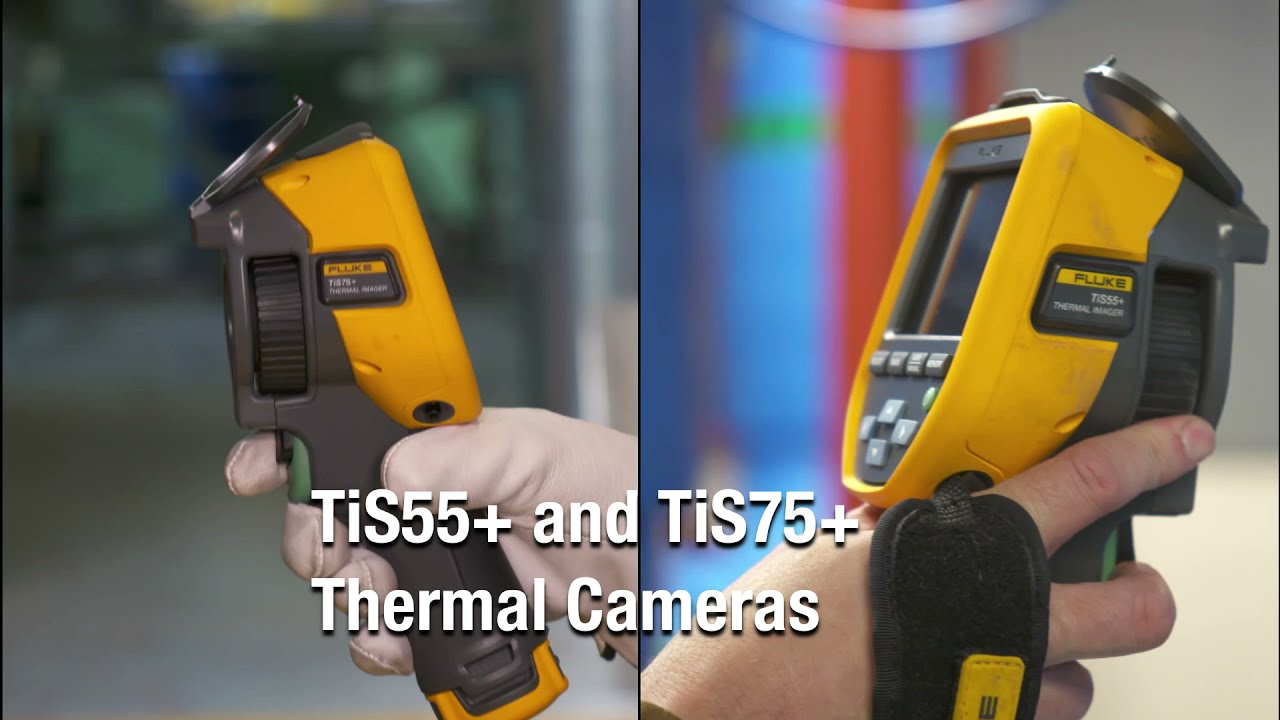
Fluke TiS75+ and TiS55+ Thermal Cameras
Classification by wavelength (Spectral range)
Each type of wavelength is suitable for "seeing" through different environments:
LWIR (Long-wave Infrared – 7-14 µm): Most commonly, it's used for electrical testing, construction, and general security monitoring.
MWIR (Mid-wave Infrared – 3-5 µm): Often used in cooled cameras, ideal for detecting gas leaks or for long-distance observation through smoke or fog.
SWIR (Short-wave Infrared – 0.9-1.7 µm): Used for testing material defects, semiconductors, or in high-tech agriculture.
The use of thermal cameras in factories goes beyond simply taking images; it's an integral part of predictive maintenance. Below is a five-step process for effective and safe use:
1. Preparation and Parameter Setup (Extremely Important) To ensure accurate measurement results, you need to set the following parameters on the device:
Emissivity: Adjust the setting according to the material (for example, painted metal is usually 0.95, polished metal is much lower). If set incorrectly, the displayed temperature will be inaccurate.
Reflected Temperature: Adjust to eliminate the influence of surrounding heat sources reflecting off the surface of the object being measured.
Temperature range: Select the appropriate measurement range (e.g., -20°C to 120°C for electrical cabinets or up to 1000°C for furnaces).
2. Conduct on-site measurements.
Safe distance: Maintain a sufficient distance from high-voltage electrical equipment, but close enough so that the object to be measured occupies at least 3x3 pixels on the sensor.
Focus: Out-of-focus thermal images will lead to inaccurate temperature calculations. Ensure the image is clear before saving.
Use MSX/Fusion mode: Enable the feature that blends physical and thermal images to easily pinpoint the exact location of the overheating component.
3. Locations requiring periodic inspection in the factory
Electrical system: Inspect the connections in the electrical cabinet, circuit breakers, and transformers. Look for "hot spots" caused by loose screws or overload.
Mechanical system: Measure the temperature of bearings, motors, gearboxes, and conveyors. Abnormal temperature increases are often a sign of insufficient lubrication or mechanical wear.
Heat exchange system: Inspect steam pipes and steam traps for leaks or blockages.
4. Analysis and Assessment of Severity Based on the Delta T standard (ΔT – temperature difference):
ΔTcap delta cap ΔT from 1-10°C: Further monitoring is needed.
ΔTcap delta cap ΔT from 10-40°C: This is a serious fault and requires prompt repair planning.
ΔTcap delta cap TΔ𝑇 > 40°C: Danger! The machine must be stopped and dealt with immediately to prevent fire and explosion.
5. Export reports and store them in the cloud (digitize measurement results data).
Use specialized software from the manufacturer (such as Fluke Connect, Testo IRSoft) to automatically generate PDF reports.
Synchronize data to the cloud to compare temperature trends of the same device across months, thereby predicting when the device will fail.
You can definitely contact them. SEMIKI Measuring Equipment Co., Ltd. To request advice on purchasing a thermal camera, contact SEMIKI, a reputable provider of precision measurement solutions and industrial machinery in Vietnam.
Why should you seek advice from SEMIKI?
Brand diversity: SEMIKI distributes thermal cameras and temperature measurement devices from major manufacturers such as FLUKE (for example, the VT08 series) Testo, SATO, and CUSTOM JAPAN.
Advanced solutions: SEMIKI not only sells equipment but also provides machine vision inspection systems, enabling the integration of thermal cameras into automated production lines.
Support services: The company provides a full range of services, from consulting on equipment selection suitable for the temperature range, installation, to calibration and routine maintenance.
Reputation: SEMIKI has experience serving numerous manufacturing plants and industrial zones nationwide.
When contacting us, you should provide clear information. intended use (electrical measurement, body temperature measurement, or production monitoring) and temperature range Measurements are necessary so that SEMIKI's engineers can come up with the most optimal solution in terms of cost and functionality.
Contact Semiki directly: You can find Semiki's contact information (via website or phone number) to request a quote and specific advice.
 English
  Vietnamese
  Japanese
  Korean